1- The architect sits in the garden, draws from the frames. She gazes at the Ancient Temple, and then changes in a different position through the Temple (to get different view, different proportions in the landscape). When the position is changed, view does not change in a parallel way.
2- She goes back to the previous position, then stopping, extracting the time.
3- She walks through the garden from a different pathway rather than the usual pathways.
4- The intersecting slopes and the follies drag the eye during the journey. Participant tries to control this floating in the space.
5- ?? (HOW TO GET INTO THE VESSEL?)
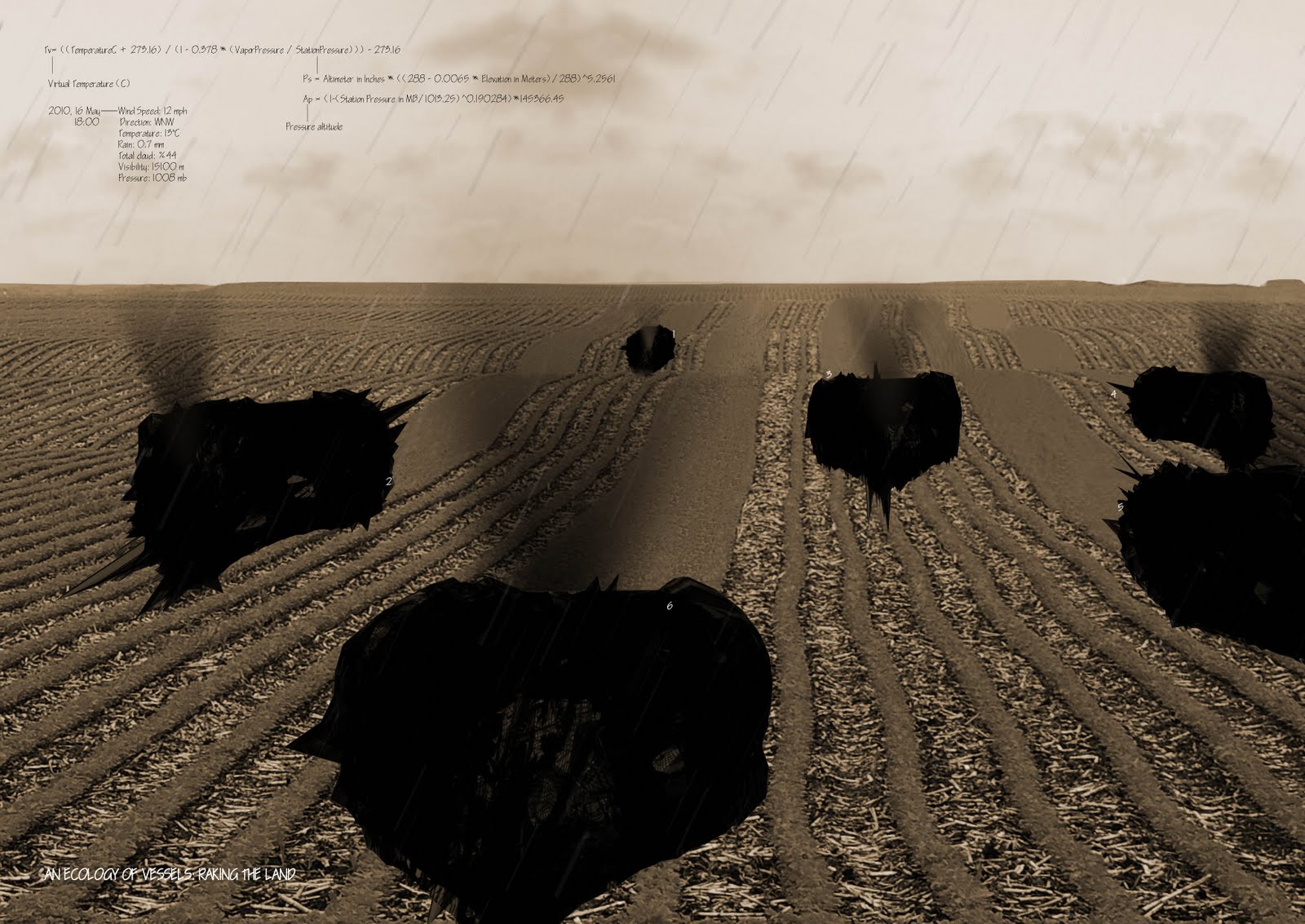
6- Getting into the vessel from the garden to everyday life. Observer looks at the portholes through a glitch, and the images, which are seen through the glitch, “some are the reflections of a basic reality, some mask and pervert a basic reality, some mask the absence of a basic reality, some bears no relation to any reality whatever: it is its own pure simulacrum” (Baudrillard, cited in Poster 2001, p. 173). When the observer looks at the porthole, something changes back of her (light conditions, shadows). A virtual camera records these changes, but cannot control, because the participant controls the space. These records construct the skin of the vessel, and the vessel casts a shadow on the landscape.
7- Vessel scans the landscape and records it. But he cannot scan its own shadow, because it cannot see it. Another virtual camera records these changes on the landscape (shadow of the vessel), but cannot control, because they are the representations of the phenomena from the inside.
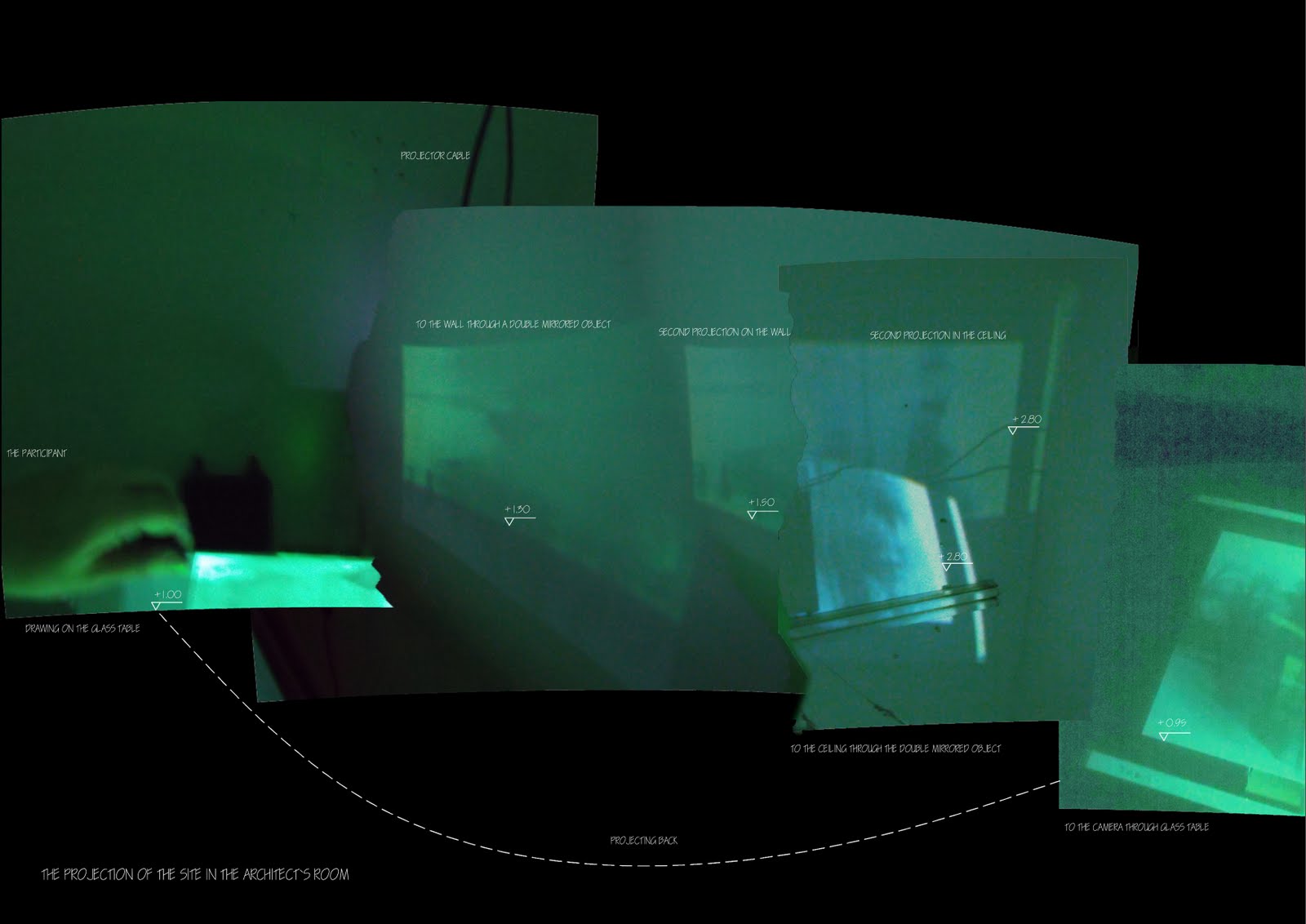
8- Participant accesses these virtual records from the glass table in the interior. She is editing out the information, drawing the changes, drawing the traces. After records pass through the lines, they reach to the camera under the table. The records are reflected from the double mirrored transparent object to the wall, to the ceiling as anamorphic surfaces, and another camera records these changes, and the participant accesses to the record of the changes from the glass table...
* These anamorphic surfaces show how a space from a different level occurs in a different surface as the reflection of other objects in the space.
* This project is an attempt to design a guidance system that enhances picturesque method, which is a guidance system itself. In the picturesque theory, the observer knows her place, however in this project participant is inside a vessel floating in the landscape; a garden which always drags the observer’s eye. The project tries to visualize this floating in the space in order to reread the picturesque virtually. It is an endless process of rereading, which is unique in each time.